
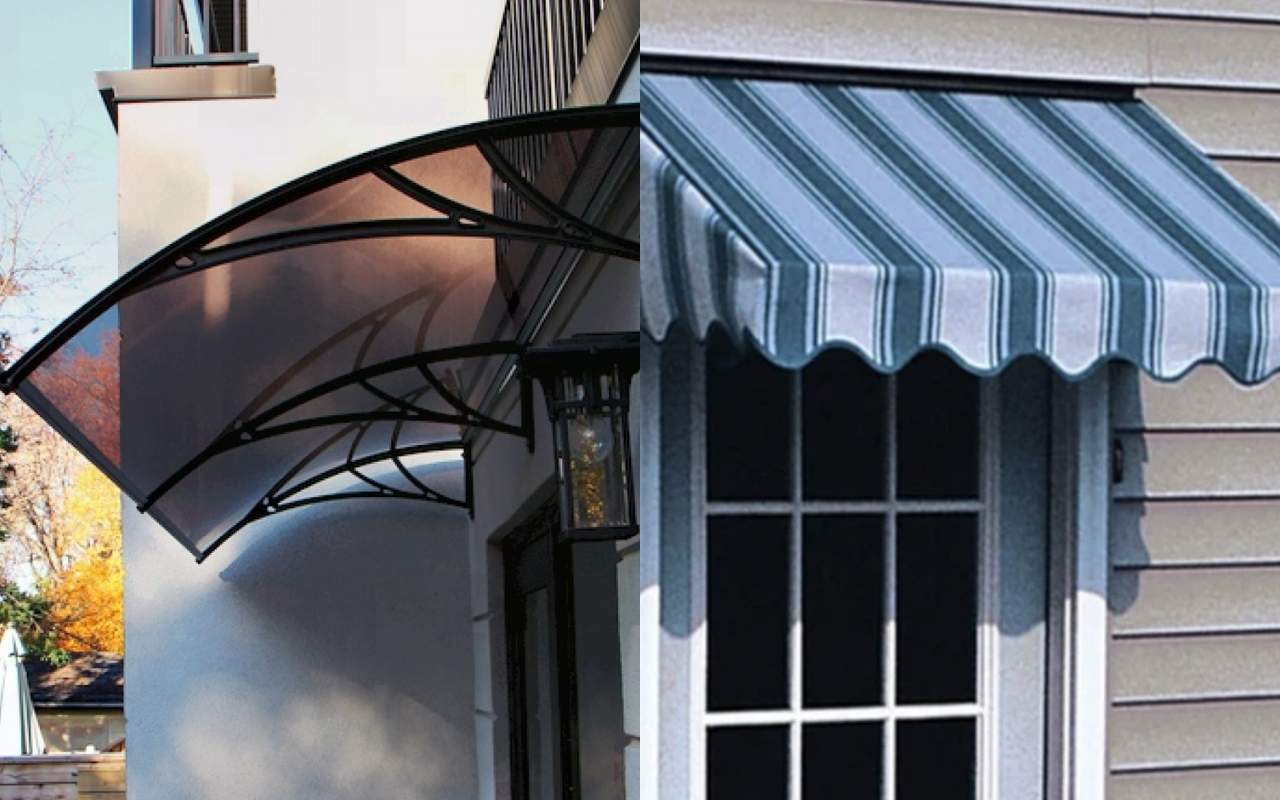
Polycarbonate vs. fabric awnings is a common question for homeowners and business owners looking to enhance their outdoor spaces. Both types offer shade, weather protection, and curb appeal, but they come with different features, lifespans, and maintenance requirements. If you’re considering adding an awning to your property, this guide will help you compare the two so you can make the right decision for your needs.
What Are Polycarbonate Awnings?
Polycarbonate awnings are made from a strong, lightweight plastic material that is highly durable and weather-resistant. These awnings are available in clear or tinted panels and are typically mounted on an aluminum or metal frame. They’re ideal for areas that need light control without losing brightness.
Benefits of Polycarbonate Awnings
- Durability: Polycarbonate is impact-resistant and performs well in extreme weather, including snow, rain, and high winds.
- UV Protection: These panels block harmful UV rays while still letting in natural light.
- Low Maintenance: A quick rinse or wipe is often all that’s needed to keep them looking new.
- Modern Look: Clean lines and transparent panels suit modern architectural styles.
Things to Consider
- Cost: They often come with a higher initial investment compared to fabric options.
- Design Options: Panel colors are typically limited to clear, grey, or bronze, offering fewer decorative choices.
What Are Fabric Awnings?
Fabric awnings use weather-resistant fabrics like acrylic, canvas, or polyester stretched over a metal frame. These awnings are popular for their decorative appeal and flexibility and are commonly used for patios, decks, windows, and storefronts.
Benefits of Fabric Awnings
- Style Variety: Available in a wide range of colours, patterns, and shapes to match any aesthetic.
- Budget-Friendly: Usually more affordable upfront than polycarbonate alternatives.
- Retractable Options: Many fabric awnings can be manually or automatically retracted depending on the weather.
Things to Consider
- Weather Exposure: Fabric can fade, tear, or develop mildew over time, especially in harsh climates.
- Maintenance: Regular cleaning is required to maintain their appearance and prevent mold.
- Lifespan: Fabric awnings typically last 5–10 years depending on use and care.
Polycarbonate vs. Fabric Awnings: Side-by-Side Comparison
| Feature | Polycarbonate Awnings | Fabric Awnings |
| Durability | High | Moderate |
| Weather Resistance | Excellent | Good |
| UV Protection | Built-in | Depends on fabric |
| Maintenance | Low | Medium to high |
| Style Options | Modern, sleek | Wide variety of colours |
| Lifespan | 10–20 years | 5–10 years |
| Upfront Cost | Higher | Lower |
| Light Control | Filters sunlight | Full shade |
Which Awning Is Right for You?
Both polycarbonate and fabric awnings offer distinct advantages, and the best choice depends on your goals, budget, and design preferences.
- Choose polycarbonate awnings if you want long-lasting protection, minimal upkeep, and a modern appearance.
- Choose fabric awnings if you’re looking for bold style choices, budget-friendly solutions, or retractable functionality.
Either way, you’ll be adding comfort, style, and value to your property.
Wrapping It Up
There’s no one-size-fits-all answer in the debate of polycarbonate vs. fabric awnings. Each option offers practical benefits and aesthetic appeal, and both are excellent ways to improve your outdoor space.