
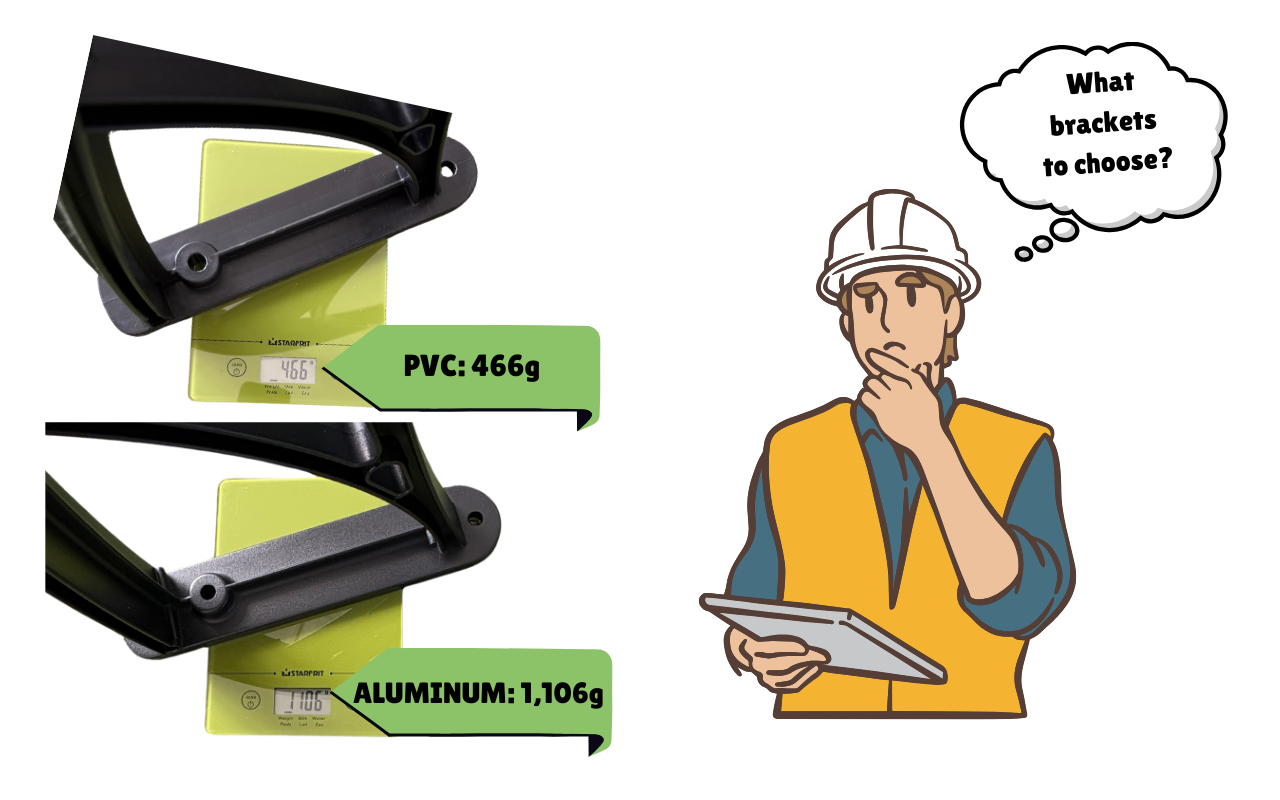
Polycarbonate awning bracket material plays a crucial role in the overall strength and durability of your awning system. When selecting an awning, one of the most important decisions you’ll make is choosing between aluminum and PVC brackets. These components are responsible for supporting your awning through various weather conditions. While both materials are commonly used, each offers unique advantages and limitations. Understanding their differences can help you make the best choice based on your local climate, budget, and long-term needs.
The Importance of Choosing the Right Bracket Material
Brackets are the foundation of your polycarbonate awning, providing the necessary support to ensure that it stays securely in place over time. Whether you’re installing an awning to protect your patio, doorway, or windows, choosing a bracket material that suits your environment and usage is crucial for durability, safety, and long-term performance.
Aluminum Brackets: Strength, Durability, and Corrosion Resistance
Aluminum is a popular choice for awning brackets due to its strength and corrosion-resistant properties. Here are the key benefits of choosing aluminum brackets:
Strength and Corrosion Resistance
Aluminum is known for being lightweight yet incredibly strong. It’s a durable material that resists corrosion, making it ideal for areas that experience heavy rainfall, snow, or humidity. This is particularly important in regions with extreme weather conditions, as the material will stand up to the elements without rusting.
Ideal for High-Wind Areas
In areas prone to strong winds, aluminum brackets are often the preferred choice. The material’s sturdiness allows it to withstand gusts without bending or breaking, offering superior support for the polycarbonate panels.
PVC Brackets: Lightweight, Budget-Friendly, and Functional
PVC (Polyvinyl Chloride) is a strong, engineering plastic that provides a cost-effective alternative to aluminum. Here are the key advantages of choosing PVC brackets:
Lighter and More Affordable
One of the main reasons homeowners opt for PVC brackets is that they are lighter and more budget-friendly compared to aluminum. PVC is an affordable material that works well for standard residential use, where extreme weather conditions aren’t a concern.
Easy to Install
Due to their lightweight nature, PVC brackets are easier to handle and install, making them a great option for DIY projects. If you’re installing the awning yourself or have a limited budget for professional installation, PVC may be the ideal choice.
Good for Standard Weather Conditions
While PVC isn’t as resistant to extreme weather as aluminum, it is still a strong and durable material that can withstand regular rain, wind, and sun exposure. For areas with moderate climates, PVC brackets are a reliable choice that offers both strength and value.
How to Choose Between Aluminum and PVC Brackets
Your decision between aluminum and PVC brackets depends on a variety of factors, including:
- Weather Conditions: If you live in an area with harsh winters, strong winds, or salty air (e.g., coastal regions), aluminum brackets are likely the better choice for their superior corrosion resistance and strength. Aluminum’s resistance to the elements ensures the long-lasting security of your awning.
- Budget: If you’re on a tighter budget or installing an awning in a mild climate, PVC brackets are a cost-effective choice that still provides solid support without the higher price tag of aluminum.
Key Takeaways
Both aluminum and PVC brackets offer excellent support for polycarbonate awnings, but the right choice depends on your specific needs. Aluminum brackets are perfect for harsh environments and high-wind areas, offering strength and corrosion resistance. On the other hand, PVC brackets are ideal for homeowners looking for an affordable, lightweight option for standard residential use. By considering your local weather conditions and budget, you can choose the bracket material that will work best for your awning, ensuring its durability and performance for years to come.